
Most everyday items are allowed on planes, including medications, toiletries, and personal comfort items, but some must follow TSA liquid rules or additional screening requirements depending on how they are packed.
This guide explains what you can bring in carry-on and checked bags, along with detailed rules for common items travelers ask about.
If you are unsure about a specific item, use the category guide below to quickly find the exact rule and packing guidance.
What You Can Bring on a Plane: By Category
If you are looking for rules on a specific item, start here. These guides are organized by category so you can quickly find exactly what applies to your situation and how to pack it correctly for airport security.
Medications & Health
Medications and health items are generally allowed on planes, but some forms like liquids or controlled substances follow additional TSA rules. Use the guides below to understand how specific medications are handled at airport security.
| Guide | What To Know Before You Go Through TSA |
|---|---|
| Can you bring liquid medication on a plane? | Why it can exceed 3.4 oz, what must be declared, and what triggers extra screening |
| Can you bring prescription medication on a plane? | When documentation matters, how TSA checks medications, and what happens with liquids |
| Can you bring allergy medication on a plane? | When liquids and sprays become an issue and how to avoid delays at security |
| Can you bring CBD on a plane? | Where legality becomes a problem, what TSA allows, and when products get questioned |
| Can you bring antibiotics on a plane? | How liquid antibiotics are handled and what to expect during screening |
| Can you bring sleeping pills on a plane? | Differences between prescription and over-the-counter and how TSA treats them |
| Can you bring melatonin on a plane? | Whether sleep aids raise any issues and how they are classified at security |
| Can you bring vitamins on a plane? | How supplements are screened and when powders or capsules may get flagged |
| Can you bring Tylenol on a plane? | Whether liquid versions trigger the 3.4 oz rule and how to pack them properly |
| Can you bring Advil on a plane? | How common pain relievers are treated and whether packaging affects screening |
| Can you bring Ibuprofen on a plane? | What TSA looks for with standard medications and how to avoid unnecessary checks |
Liquids & Toiletries
Liquids and toiletries are allowed on planes, but most items are subject to strict carry-on limits based on size, type, and packaging. Use the guides below to understand how common toiletries are treated at airport security and what often causes items to be taken at the checkpoint.
| Guide | What To Know Before You Go Through TSA |
|---|---|
| Can You Bring Sunscreen on a Plane? | Why full-size bottles are often taken, how sprays are treated, and which types avoid liquid restrictions entirely |
| Can You Bring Shampoo on a Plane? | How the 3.4 oz rule is enforced, why partially used bottles still get taken, and the easiest way to pack it |
| Can You Bring Deodorant on a Plane? | Why solids, sprays, and gels are treated differently and what causes confusion at airport security |
| Can You Bring Toothpaste on a Plane? | How it’s classified under liquid rules, what size limits apply, and why it often gets flagged in carry-on bags |
| Can You Bring Perfume on a Plane? | How bottle size is evaluated, why even small perfumes get taken, and the easiest way to pack fragrance for carry-on travel |
| Can You Bring Lotion on a Plane? | How TSA applies liquid limits to lotion, why full-size bottles are often taken, and the easiest way to pack it for carry-on travel |
Everyday Items & Accessories
- Can You Bring a Flashlight on a Plane?
- Can You Bring Pins on a Plane?
- Can you Bring a Blanket on a Plane?
While the guides above cover specific items in detail, it also helps to understand the general TSA rules that apply across all categories. These rules determine how items are screened, what needs to be removed from your bag, and what may be restricted depending on how it is packed.

TSA Carry-On Rules at a Glance
| Category | Rule |
|---|---|
| Carry-on bag | Allowed items must pass TSA screening |
| Liquids | Limited to 3.4 oz containers in a quart-sized bag |
| Medications | Allowed in carry-on and checked luggage |
| Food items | Usually allowed with some restrictions |
| Sharp objects | Often restricted in carry-on bags |
Understanding these basic rules helps travelers avoid delays at airport security. This guide explains the main TSA carry-on regulations and links to detailed guides for common items travelers frequently ask about.
If you are unsure about a specific item, use the category guide below to quickly find the exact rule and packing guidance.
Understanding TSA Carry-On Rules
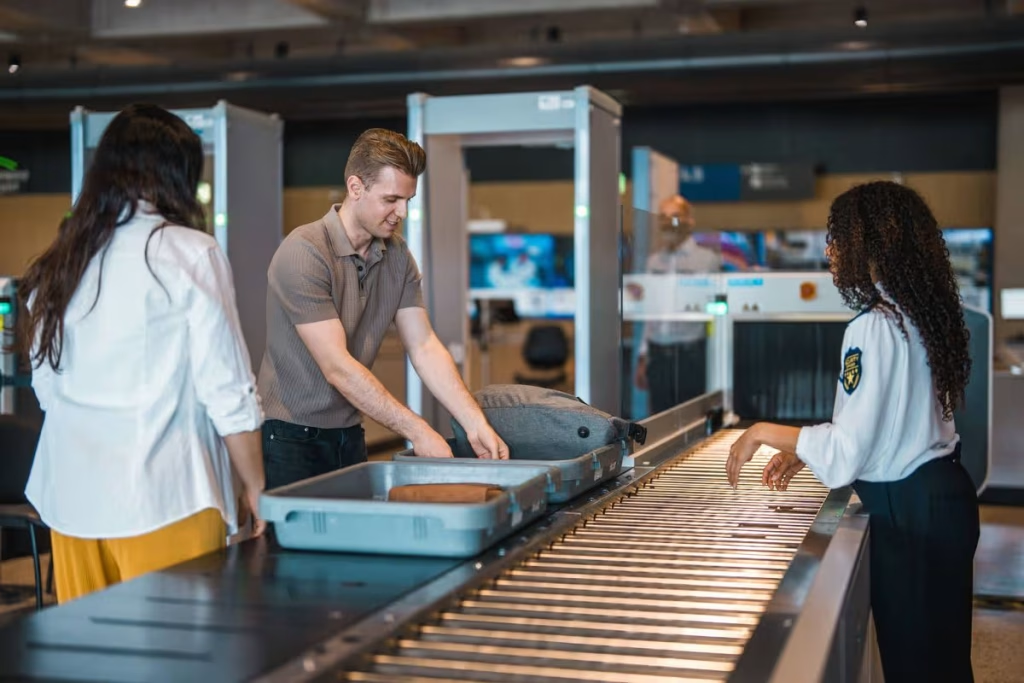
The Transportation Security Administration (TSA) is responsible for screening passengers and baggage at airport security checkpoints in the United States. TSA officers inspect carry-on items using X-ray machines and additional screening methods to identify prohibited or restricted items.
Most everyday belongings are allowed through security, but some items may require additional screening or follow special rules. For example, travelers often check the specific regulations for items such as medications, supplements, or toiletries before packing.
For detailed guidance on one common question, see our guide, Can you bring prescription medication on a plane.
Travelers typically bring three types of baggage through the airport:
Carry-on luggage
This is the main bag placed in the overhead compartment on the aircraft. It must pass through TSA screening at the security checkpoint.
Personal items
These include smaller bags such as purses, laptop bags, or backpacks that fit under the seat in front of you.
Checked luggage
These bags are checked at the airline counter and placed in the aircraft cargo hold. Some items restricted in carry-on bags may still be allowed in checked baggage.
Understanding these differences helps travelers pack correctly and avoid having items removed at security.
Liquids, Toiletries, and the TSA 3-1-1 Rule
One of the most important airport security rules involves liquids and toiletries in carry-on luggage.
The TSA uses the 3-1-1 rule, which means:
- Liquids must be in containers 3.4 ounces (100 ml) or smaller
- All liquid containers must fit in one quart-size clear bag
- Each passenger may bring one liquids bag
This rule applies to common toiletries such as shampoo, toothpaste, lotion, and liquid cosmetics.
If a container is larger than 3.4 ounces, it will usually be removed during screening even if it is partially empty.
This rule applies to common toiletries such as shampoo, toothpaste, lotion, and liquid cosmetics.

Medications and Supplements
Medications are generally permitted in both carry-on and checked luggage, and travelers are encouraged to keep important medications in their carry-on bags.
Prescription medications do not fall under the standard TSA liquids rule in the same way as toiletries. Liquid medications are allowed in quantities larger than 3.4 ounces when medically necessary, although they may require additional screening.
Most pills and tablets are unrestricted and can be packed normally in carry-on luggage.
Travelers often ask about specific medications and supplements. These guides explain the rules in detail:
- Can you bring prescription medication on a plane
- Can you bring sleeping pills on a plane
- Can you bring melatonin on a plane
- Can you bring vitamins on a plane
Keeping medications organized and accessible during screening can help the process move more quickly.

Comfort Items and Personal Accessories
Many travelers bring comfort items on flights, especially for long journeys.
Common examples include:
- Travel blankets
- Neck pillows
- Small accessories such as lap blankets or personal comfort items
These items are generally allowed through airport security as long as they pass standard screening procedures.
For example, blankets are permitted in both carry-on and checked luggage, although they may occasionally be removed for inspection during screening. See our detailed guide: Can you bring a blanket on a plane.
Small accessories such as decorative pins are also usually allowed, though sharp objects may sometimes receive additional inspection. Learn more here: Can you bring pins on a plane.
Items That Are Restricted in Carry-On Bags
While most everyday belongings are allowed on planes, certain items cannot pass through airport security in carry-on luggage.
| Item Type | Carry-On Allowed | Checked Bag Allowed |
|---|---|---|
| Large liquid containers | No | Yes |
| Sharp objects (knives, scissors) | Usually no | Yes |
| Certain tools | Usually no | Yes |
Many restricted items can still travel in checked baggage instead of carry-on luggage.
If a restricted item is discovered during screening, TSA officers may confiscate it or ask the traveler to return to the check-in area to place it in checked luggage.
Checking TSA guidelines before packing helps prevent these situations and keeps the security process moving smoothly.
Tips for Getting Through Airport Security Faster
Preparing your carry-on bag correctly can significantly speed up the airport security process. These simple habits help travelers move through TSA screening more quickly.
| Tip | Why It Helps |
|---|---|
| Pack liquids in a quart-size bag | Makes them easy to remove during screening |
| Separate large electronics | TSA may require laptops or tablets to be screened separately |
| Keep medications accessible | Allows faster inspection if TSA officers need to check them |
| Organize your carry-on bag | Reduces the chance of additional manual screening |
Following these simple packing habits can make airport security faster and less stressful.
TSA Carry-On Rules FAQs
Most everyday items including clothing, electronics, medications, and small toiletries are allowed if they pass TSA screening rules.
Yes, prescription and over-the-counter medications are generally allowed in carry-on luggage.
Yes, most toiletries such as toothpaste, shampoo, and lotion must follow the 3-1-1 liquids rule.
Yes, prohibited items discovered during screening may be removed or confiscated.
Most supplements such as vitamins and capsules are allowed in carry-on bags.
Conclusion
Most everyday travel items are allowed on planes as long as they comply with TSA screening guidelines. Understanding rules for liquids, medications, and personal items can help travelers pack correctly and move smoothly through airport security.
If you are unsure what you can bring on a plane, reviewing TSA carry-on rules before flying can help prevent delays and avoid confiscated items. You can also use the category guide above to quickly find detailed rules for specific items such as medications, toiletries, and everyday travel accessories.
22 thoughts on “What Can You Bring on a Plane? TSA Rules for Common Items”